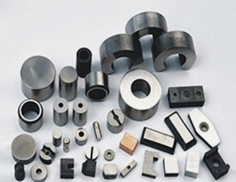
Permanent ferrite magnet is a high-performance material currently widely used in the field of magnetic materials. It has the advantages of high magnetism, high stability and high temperature performance. Its main components are barium magnesium ferrite, iron barate, nickel, copper and other elements. Different proportions in the magnet can produce different magnetic properties.
Barium-magnesium ferrite is the main component of permanent ferrite magnets, accounting for more than 80%. Barium-magnesium ferrite is composed of manganese ferrite and a hard magnetic phase with a perovskite structure. Because the oxygen ions of barium-magnesium ferrite have good coordination, they can form a strong exchange effect with the internal iron ions. At the same time, barium-magnesium ferrite also has large magnetocrystalline anisotropy and can better Control the magnetic direction.
In addition to barium magnesium ferrite, iron barate is also one of the important permanent magnet ferrite magnet components. The dynamic exchange between the oxygen ion sublattice and iron ions of iron barate allows it to form a hard magnetic phase and provide strong magnetism. The content of iron barate in magnets is usually controlled at about 5%.
Elements such as nickel and copper are often added to permanent ferrite magnets. These elements are usually used to improve the corrosion resistance of the magnet. They can also regulate the magnetic properties of the magnet by restraining the grain growth in barium-magnesium ferrite.
The main components of permanent ferrite magnets include barium magnesium ferrite, iron barate, nickel, copper and other elements, which can produce different magnetic properties in different proportions. In addition, with the development of science and technology, more and more composite materials, such as iron oxide, steel oxide, etc., are used in the manufacture of permanent ferrite magnets, which will further promote the development and application of permanent ferrite magnets.