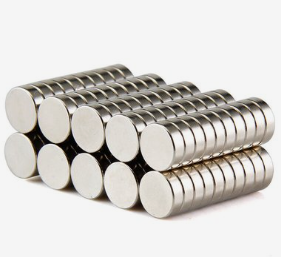
Magnets have been widely used in various fields, such as electric power, engineering, medical and other industries. Magnets are often affected by low and high temperatures under different application conditions. So, do low and high temperatures have the same effect on magnets?
First, both low and high temperatures affect the magnetic properties of magnets. Normally, the magnetic properties of magnets are greatly affected by temperature. High temperature will reduce the magnetic properties of the magnet, and when the temperature of the magnet reaches a certain level, the magnetism will even disappear completely. This is because high temperatures will destroy the magnetic structure inside the magnet, causing it to lose its magnetism. However, low temperatures also have an effect on magnets, but not as dramatically as high temperatures. Low temperatures enhance a magnet's magnetic properties, and the cooler a magnet's temperature, the stronger its magnetic properties. This is because low temperature can make the magnetic moments inside the magnet more perfectly aligned, thereby improving the magnet's magnetic properties.
Secondly, the application of magnets at low and high temperatures is different. Some applications require the use of magnets in high temperature environments, such as the use of magnets in generators, motors, transformers, inductors and other equipment. In these devices, the magnets are constantly exposed to high temperatures, but the magnetic properties of the magnets must be maintained at all times or the devices will not function properly. In order to solve this problem, scientists have developed high-temperature resistant magnets. High-temperature-resistant magnets are made by using high-temperature materials and adopting special magnetic processing techniques. They can work in high-temperature environments without excessive loss of magnetic properties. In contrast, magnets used in low-temperature environments are generally used as magnets in superconducting devices. Superconducting magnets need to operate at very low temperatures, often down to below a few Kelvin, to meet their application requirements. Therefore, superconducting magnets must choose a superconducting material that maintains high superconducting properties at low temperatures.